There was a time when Southern Miss football belonged in the same conversation as Ole Miss and Mississippi State. Through the 1980s and ’90s, the Golden Eagles were a legitimate force, capable of beating anybody on their schedule and earning national respect without the benefit of membership in the Southeastern Conference.
Southern Miss beat Ole Miss three out of the four games played in the 1980s. In the 10 matchups with Mississippi State through the 1980s and ’90s the Golden Eagles won seven of the 10 games played.
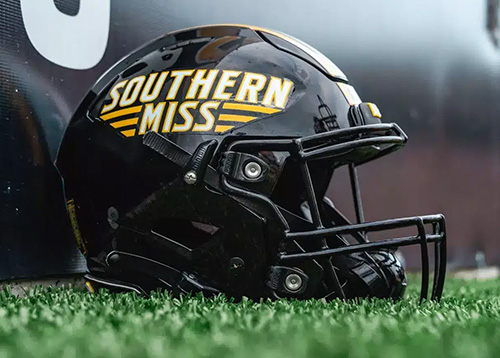
It was in those 1990s that Coach Jeff Bower took over, elevating the Southern Miss program further. The Golden Eagles enjoyed 14 consecutive winning seasons from 1994 through 2007 and won four Conference USA championships. Southern Miss became a program that no SEC school could afford to overlook.
But then college football changed, and the gap widened. As the SEC grew in popularity, television money, and recruiting exposure, national attention followed.
Ole Miss and Mississippi State benefited from that rising tide simply by being members of the SEC. Both schools still had to hire coaches, recruit players and win games, but they were operating with inherited financial advantages Southern Miss could not match.
That is not an excuse for everything that has happened in Hattiesburg in the decade plus since. Southern Miss has to own its share of the blame.
After going 12-2 in 2011 in Larry Fedora’s last year at the helm, the Golden Eagles collapsed to 0-12 in 2012 – the infamous Ellis Johnson season. The program found its footing again for a time, but coaching changes and inconsistent seasons followed. Frustrations grew.
The Will Hall era brought records of 3-9 in 2021, 7-6 in 2022, 3-9 in 2023 and 1-11 in 2024. Hall was fired during the 2024 season.
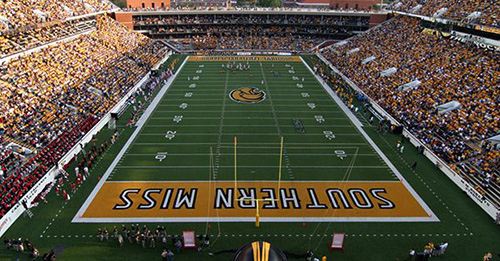
Charles Huff brought renewed hope in 2025, leading Southern Miss to a 7-6 record before bolting for Memphis. That year with Huff was an encouraging step, but one improved season cannot erase years of futility.
The Golden Eagles must recruit better, develop talent, make sound coaching decisions and build a program that can sustain success.
And now today, Southern Miss faces an even larger challenge than simply getting back to winning football. College football’s financial landscape has changed dramatically, and the distance between the SEC and the other big conferences and the Group of Six conferences is substantial.
Now comes the likelihood of an expanded 24-team College Football Playoff. More teams may sound like more opportunity, but the details matter.
If the expanded field primarily creates additional openings for the power conferences, schools such as Southern Miss and other Sun Belt programs will remain on the outside looking in.
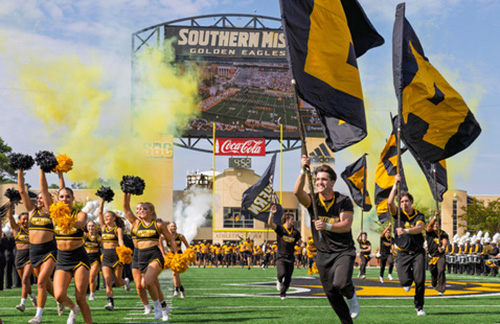
A playoff should reward the best teams, but it should also give deserving programs a meaningful path to compete. Conference champions from leagues outside the power structure should have a fair opportunity to earn their place, rather than depend on the occasional invitation from a system built around the biggest brands.
Southern Miss cannot blame the likes of the SEC for every lost season or missed opportunity. The program must earn its way back into the national conversation. But it is fair to recognize that the game itself has changed, and not every school has benefited equally.
For decades, the Golden Eagles proved they could compete with the biggest programs. They did it without SEC money, without SEC membership and without the built-in advantages that now define modern college football.
Southern Miss didn’t simply fall behind. The goalposts moved, the money grew, and the playing field tilted.
The Golden Eagles still have work to do. But college football should never forget that Southern Miss once stood toe-to-toe with its bigger neighbors — and that a fair playoff system ought to give programs like USM and its G6 brethren a chance to matter again.